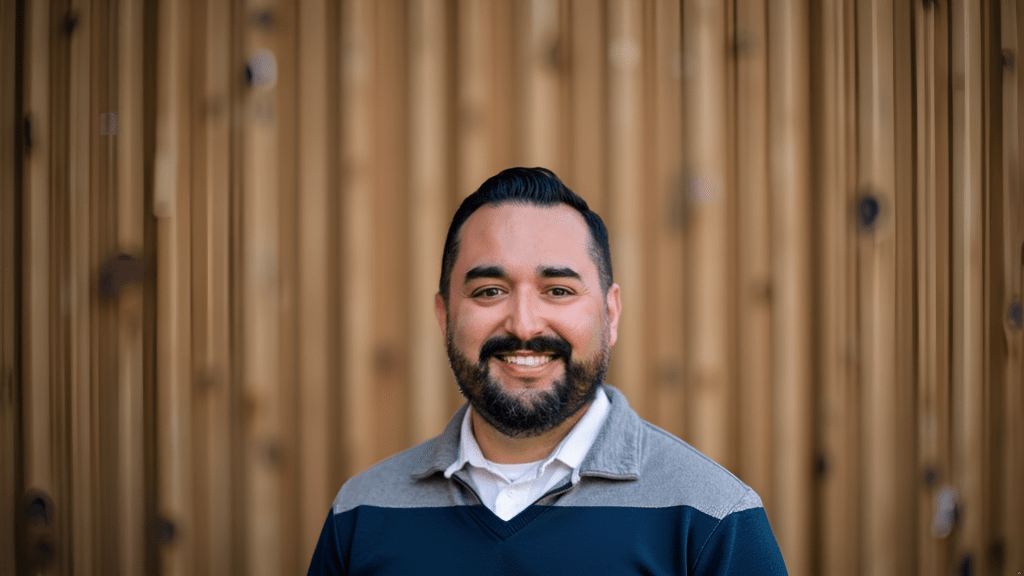
Across cultures, households, and generations, one issue remains quietly universal: millions of people learned how to endure, but not how to understand their emotions. Feelings were inherited instead of explained. Patterns were repeated rather than questioned. In many families, silence became the default language. This unspoken emotional legacy is at the center of the work of Francisco Castillo, a Mexican American author, Navy veteran, and marriage and family therapist whose books help readers confront and rewrite the emotional programming they never chose.
Through The Generational Algorithm, Mijo: We Bend, Not Break, and Embracing the S.U.C.K., Castillo offers a framework for understanding the inherited emotional codes that shape identity, coping mechanisms, and relationships. In therapy rooms, military spaces, and cultural communities, he has witnessed the same struggle time and again: strong, loving individuals held back by limited emotional language, ingrained silence, and survival-mode behaviors mistaken for personality. For Castillo, the revelation is simple and transformative; once people understand the emotional algorithm they inherited, they gain the power to rewrite it.
He has seen families open conversations they had avoided for decades. He has watched clients break cycles that once seemed inevitable. He has heard from readers who finally recognized that what they believed were personal flaws were actually generational patterns passed down quietly but powerfully.
Castillo’s own journey began with unlearning. Growing up between culture, masculinity, migration, and the military, he realized that his emotional responses were shaped more by inheritance than introspection. “Most of my emotional life wasn’t mine,” he shares. “It was inherited.” That recognition became the foundation for his work.The Generational Algorithm presents emotional inheritance as a code that anyone can examine and alter.
Mijo explores these patterns through storytelling, showing how silence and expectation shape identity across generations. Embracing the S.U.C.K. blends cultural grit with authenticity, proving that emotional growth doesn’t require academic language, just honesty. Castillo’s writing process is grounded in real, everyday moments. Many of his insights emerged while driving, listening to music, or sitting in traffic ordinary pauses that allowed space for clarity. His goal is to translate emotional truth into language that resonates with people who were never taught to talk about what they feel.
His work speaks directly to those raised in environments defined by silence, cultural expectations, or survival-mode conditioning. Castillo doesn’t write lectures. He writes to illuminate. His mission is to help readers recognize their patterns, understand where they come from, and realize they are neither alone nor defective. What they are is conditioned by experiences, culture, and generational repetition. And conditioning, he insists, can be rewritten.
At his core, Castillo is shaped by resilience, service, and cultural insight. As a therapist and Navy veteran, he understands the emotional weight that people carry while continuing to push forward. His voice blends clarity and compassion, offering connection without judgment.
More than anything, Castillo hopes his work becomes a blueprint for emotional agency, a tool for anyone ready to interrupt inherited patterns and create something healthier for the generations that follow.
To readers standing at the edge of change, he offers a simple, powerful message: You don’t need confidence to begin just honesty. One pause, one intentional decision, one new conversation is all it takes to start rewriting what was passed down.
And if you’re reading his work, Castillo says, you’ve already taken the first step. Awareness is not the beginning. It is progress. And it is enough.


 New York Herald
Leave a comment