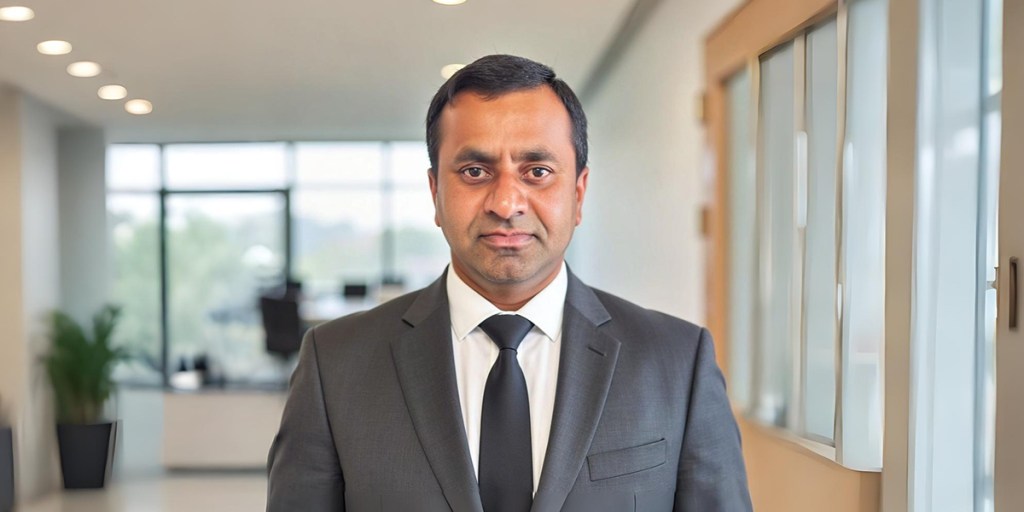
Vijaya Rama Raju Gottimukkala has fifteen years of experience across banking, finance, and insurance, with a decade spent working within the U.S. financial landscape. Vijay has built and modernized platforms that form the backbone of global payment networks. His work at SWIFT and across major financial institutions focuses on software engineering, cloud computing, and artificial intelligence.
Trained as a full-stack engineer with expertise in Java, AWS, Angular, and microservices, Vijaya has played a critical role in advancing ISO 20022 adoption, SWIFT gpi initiatives, and AI-driven transaction monitoring systems that make cross-border payments faster, safer, and more transparent. He has helped institutions detect fraud, manage risk, and resolve exceptions with unprecedented efficiency. This interview explores how Vijay approaches engineering at a global scale, the ethical weight of designing systems the world depends on, and why the future of finance will be shaped as much by thoughtful engineers as by policy makers.
Q1: Vijaya Rama Raju Gottimukkala, we’re delighted you could join us. With more than fifteen years working on systems most people never see, but nearly everyone depends on, what personal or professional moment first made you realize that financial infrastructure would be the area where you wanted to leave your impact?
Vijaya Rama Raju Gottimukkala: Early in my career, I was drawn to the challenge of building systems that operated quietly in the background yet carried enormous responsibility. The defining moment came when I began working on cross-border payment and financial messaging platforms, systems where even a millisecond delay or a minor defect could affect millions of transactions globally.
What struck me most was the realization that these invisible systems underpin trust between institutions, countries, and economies. Designing platforms that had to be secure, resilient, and always available showed me that financial infrastructure isn’t just about technology; it’s about reliability at a global scale. Over time, as I contributed to modernizing legacy messaging systems and enabling faster, more transparent payments, I recognized that this was where my work could have a lasting impact: strengthening the backbone of global finance while ensuring trust, compliance, and continuity for people who may never see the systems but depend on them every day.
Q2: Cross-border payment systems require careful and precise consideration. When you design platforms that operate under near-zero tolerance for failure, how do you personally balance innovation with the ethical and operational responsibility of safeguarding global financial trust?
Vijaya Rama Raju Gottimukkala: For me, innovation in financial infrastructure has always been about responsibility first and novelty second. In cross-border payment systems, failure is not just a technical issue; it can disrupt liquidity, regulatory compliance, and institutional trust across borders. I approach this balance by ensuring that every innovative component is anchored in resilience, observability, and explainability.
When introducing new architectures or capabilities, such as cloud-native microservices or AI-driven monitoring, I focus on incremental, well-governed adoption. This includes strong fallback mechanisms, deterministic processing paths, and rigorous validation under real-world failure scenarios. Ethically, safeguarding global financial trust means designing systems that are transparent, auditable, and compliant by design rather than as an afterthought.
Innovation, in my view, should reduce risk rather than introduce uncertainty. By embedding security, compliance, and operational accountability into the core architecture, I ensure that progress enhances trust in the financial ecosystem instead of compromising it.
Q3: You’ve worked and researched on ISO 20022 and SWIFT gpi-aligned systems. From an engineering perspective, what complexities arise when legacy financial messaging standards are translated into cloud-native, microservices-based architectures? Which of those challenges are most underestimated by leadership teams?
Vijaya Rama Raju Gottimukkala: Translating legacy financial messaging standards such as ISO 20022 into cloud-native, microservices-based architectures introduces complexity far beyond simple data transformation. One of the primary challenges is preserving semantic integrity, ensuring that richly structured ISO 20022 messages retain their meaning, validation rules, and regulatory context as they move through distributed services.
Another major complexity lies in maintaining transactional consistency and determinism. Legacy systems were often built around centralized, sequential processing, whereas microservices favor eventual consistency and asynchronous communication. Designing services that meet strict ordering, reconciliation, and audit requirements requires careful orchestration, idempotency controls, and robust state management.
What leadership teams often underestimate is the operational and cultural impact of this transition. Modernizing messaging standards is not just a technical upgrade; it demands rethinking governance, testing strategies, and failure management in a highly regulated environment. Without sufficient investment in observability, schema governance, and domain expertise, organizations risk introducing fragility into systems that were originally designed for absolute reliability.
Q4: You’ve helped reduce deployment cycles by 40% through CI/CD automation. Apart from efficiency gains, what cultural shifts do you believe DevOps introduces into financial institutions that are traditionally risk-averse and compliance-heavy?
Vijaya Rama Raju Gottimukkala: While the efficiency gains of CI/CD automation are measurable and important, the more profound impact of DevOps in financial institutions is cultural. It encourages a shift from fear-driven change management to accountability-driven engineering. By automating builds, testing, and deployments, teams gain confidence in their systems, which reduces resistance to change in traditionally risk-averse environments.
DevOps also promotes shared ownership. Instead of development, operations, and compliance working in silos, teams begin collaborating around reliability, security, and auditability from the outset. This shared responsibility fosters earlier risk identification and more transparent decision-making.
In highly regulated institutions, DevOps introduces the idea that compliance can be embedded into pipelines through automated controls, logging, and validation rather than manual checkpoints. Over time, this creates a culture where speed and safety are no longer seen as opposing forces, but as complementary outcomes of disciplined engineering practices.
Q5: Your research encompasses secure cross-border payments, transaction monitoring, and financial messaging modernization. How have these ideas reshaped the way you embed AI/ML models into transaction monitoring and compliance workflows without compromising explainability?
Vijaya Rama Raju Gottimukkala: My research has consistently emphasized that AI/ML in financial systems must enhance human decision-making rather than obscure it. In transaction monitoring and compliance workflows, this means designing models that are interpretable, traceable, and aligned with regulatory expectations from the outset.
Rather than relying solely on opaque models, I prioritize hybrid approaches (combining rule-based logic with machine learning) to ensure that every alert or decision can be explained in clear operational terms. Feature selection, model governance, and version traceability are treated as first-class components of the system, enabling auditors and compliance teams to understand not just what a model flagged, but why.
Modern financial messaging standards like ISO 20022 further support this approach by providing richer, structured data that improves model accuracy without sacrificing transparency. By embedding explainability into the architecture, AI becomes a trusted extension of compliance workflows rather than a black box that introduces regulatory risk.
Q6: Let’s conclude with your thoughts on the future of global finance. How do you think the definition of a ‘senior engineer’ will extend to policy dialogue, ethical AI adoption, and financial infrastructure in the next ten years?
Vijaya Rama Raju Gottimukkala: In the next decade, the role of a senior engineer in global finance will extend far beyond technical execution. As financial infrastructure becomes increasingly software-defined and AI-driven, senior engineers will be expected to participate actively in policy dialogue, regulatory interpretation, and ethical decision-making.
Technical leaders will need to bridge the gap between regulators, business stakeholders, and engineering teams, translating policy intent into resilient, compliant system design. Ethical AI adoption will also become a core responsibility, requiring engineers to ensure fairness, explainability, and accountability are embedded into models that influence financial decisions at scale.
Ultimately, senior engineers will serve as stewards of trust. Their influence will shape not only how systems perform, but how financial institutions uphold transparency, inclusivity, and global stability. The future of finance will depend on engineers who understand that infrastructure is not just technology; it is a public good that demands both technical excellence and ethical leadership.
Conclusion
Vijaya Rama Raju Gottimukkala’s work reflects how technology alone does not create trust; design choices, accountability, and long-term vision do. Across cross-border payments, AI-driven compliance, and cloud-native financial platforms, Vijay reflects a disciplined commitment to reliability in environments where even minor failures can have global consequences. Vijay envisions financial platforms where automation enhances judgment instead of replacing it, and where engineers take active responsibility for the social and economic impact of their systems.



 New York Herald
Leave a comment