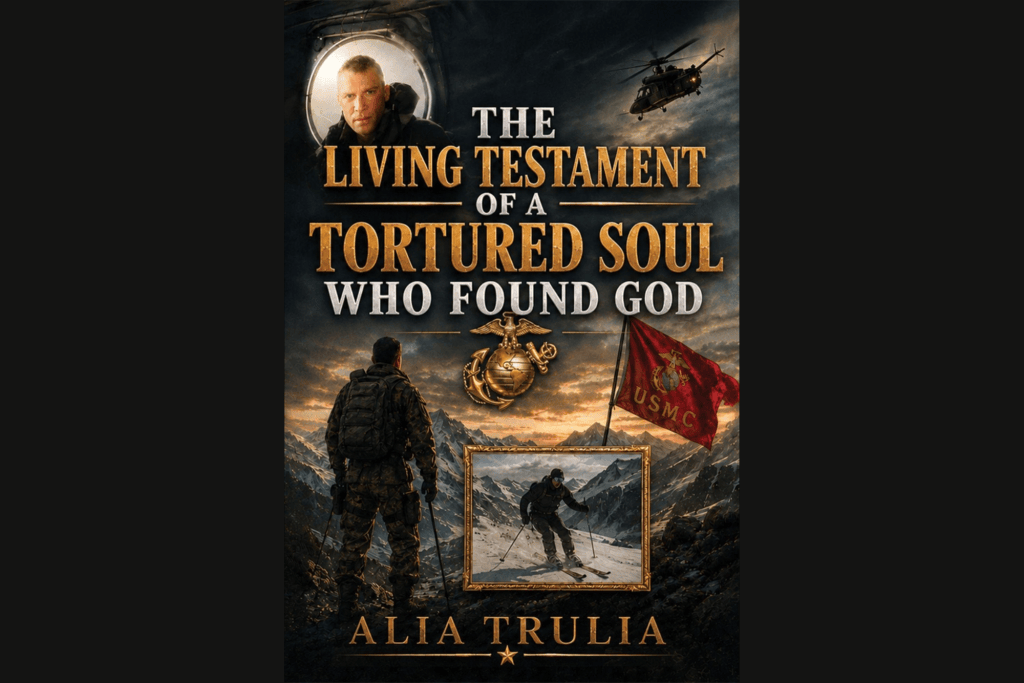
Some lives contain too much to be left only to memory. David Splan’s is one of them. His granddaughter, Alia Turlia, recognized the importance of preserving the experiences that had shaped his life and helped bring his story into written form through The Living Testament of a Tortured Soul Who Found God. What began as one man’s collection of memories became a record of hardship, discipline, service, spiritual searching, and the beliefs he carried forward after decades of struggle.
In his memoir, Splan’s life was marked by childhood trauma, athletic ambition, military service, years in education, and experiences that often defied an ordinary path. Through Turlia’s effort to preserve her grandfather’s story, those memories became more than private recollections. They became part of a memoir intended to document not only what Splan endured, but also how he understood the meaning of those experiences.
What emerges is not simply a record of hardship. It is the story of a man attempting to understand what those hardships meant and what, after decades of struggle, remained worth holding on to.
Born on May 21, 1959, in Wheaton, Illinois, Splan describes a childhood marked by instability, violence, neglect, and abuse. Some of his earliest memories are difficult ones. He recalls conflict within his family, the presence of alcohol in his childhood home, periods of neglect, and experiences that exposed him to fear at an age when most children are still trying to understand the world around them.
Yet Splan does not remember his childhood only through its darkest moments.
He also recalls friendships, simple pleasures, and periods of happiness that offered temporary relief from the difficulties surrounding him. Those memories shaped how he later understood survival. Throughout his story, Splan repeatedly returns to the belief that painful experiences should not define an entire life.
That determination became increasingly visible as he grew older.
Gymnastics offered one of his earliest outlets. Splan describes himself as physically small but intensely determined. Rather than letting his size limit his ambitions, he kept training and competing. At the 1976 Midwest Open at Glenbard North, he performed a piked double back, an achievement he remembers as an important milestone in his athletic development. He later walked onto the gymnastics team at Southern Illinois University under Coach Bill Meade.
For Splan, gymnastics represented more than athletic competition.
The discipline required by the sport gave him structure at a point when structure had often been missing from his life. Training demanded repetition, mental control, visualization, and persistence. Those lessons would follow him far beyond the gym.
His pursuit of discipline later contributed to his decision to join the Marine Corps. After high school, military service became another major chapter in a life that would eventually move through several very different roles and environments.
Splan’s memoir traces experiences not only in the military but also in education, hospice volunteering, bodyguard work, construction, meditation, and hypnotherapy. He spent years teaching and continued exploring subjects connected to human behavior, health, consciousness, and spirituality.
His life, as presented in the memoir, rarely follows a predictable line.
Splan also recounts experiences that fall outside the boundaries of a conventional biography. He describes government-related encounters, UFO sightings, unusual spiritual experiences, and events he interprets through his understanding of consciousness and faith. Such passages represent Splan’s personal memories, interpretations, and beliefs rather than independently established historical claims.
Within the memoir, however, these experiences serve a larger purpose. They show how Splan came to interpret the world around him and how questions about life, death, suffering, consciousness, and spirituality gradually became central to his thinking.
One question appears repeatedly beneath those memories: What does a person do with everything that has happened to them?
For Splan, the answer increasingly became connected to faith.
Prayer and forgiveness form important parts of his spiritual reflections. He frequently considers the need to move beyond destructive thoughts and experiences instead of allowing them to control the rest of a person’s life. Love, service, consciousness, and forgiveness become recurring ideas as he attempts to make sense of his past.
His hospice work appears to have been particularly meaningful. Splan recalls praying for guidance and asking God to teach him how to pray if working with people nearing the end of their lives was meant to become part of his path.
Experiences surrounding illness, death, compassion, and care added another dimension to a life that had long been defined by survival. Service gradually became part of Splan’s understanding of purpose.
Family is equally important to the story.
Splan writes about his children, Steven, Shannon, and Sarah, and the difficult, complicated relationships that developed across different periods of his life. His granddaughter, Alia Turlia, would ultimately play another role in preserving that family history.
Turlia’s decision to have her grandfather’s story documented helped transform years of memories into The Living Testament of a Tortured Soul Who Found God. The project gave Splan’s experiences a place beyond private conversations and scattered recollections. His childhood, achievements, service, hardships, spiritual beliefs, and reflections could instead become part of a lasting written record.
That connection between grandfather and granddaughter gives the memoir added purpose.
It is not merely about recounting what happened to one man. It also preserves a life for the people who come after him.
Splan’s story raises broader questions about how we should ultimately measure a life. Suffering may be part of a person’s history, but it doesn’t have to become the whole of that history. Discipline, service, perseverance, relationships, belief, and the ability to keep searching for meaning can matter just as much.
The Living Testament of a Tortured Soul Who Found God brings those elements together through the experiences of a man whose life has moved through remarkable highs and painful lows.
For Alia Turlia, preserving her grandfather’s story ensures that those experiences will not disappear with time. For Splan, the memoir offers a chance to look back on what he endured and consider what remained afterward.
What emerges is a story concerned not simply with survival, but with what a person chooses to carry forward from it. For David Splan, that answer rests in perseverance, service, memory, and, above all, faith.




Leave a Reply